Interior Detailing

Lingering Odors, Sticky Cupholders, and Stained Seats

Three complaints we hear constantly — and three completely different problems underneath. Here's how to diagnose what's actually wrong inside your car before you book anything.

Most people book an interior detail because of a symptom, not a diagnosis. The car smells like something. The cupholder is tacky no matter how many times it gets wiped. There's a dark ring on the passenger seat that used to be a coffee. All three feel like the same problem — "my interior is dirty" — but they're caused by three different things, and only some of them are actually a cleaning problem.

That distinction matters before you spend money. A short diagnosis at home tells you whether you need a standard interior detail, an odor removal add-on, or a mechanic instead of a detailer. It also makes your quote accurate, because the most common reason a detailing estimate changes on appointment day is that nobody described the actual problem when they booked.

The Quick Diagnosis

  • A smell that comes back after cleaning: moisture or organic material is trapped below the surface — usually carpet padding or the ventilation system. Surface cleaning won't touch it.
  • Stickiness that returns in days: dissolved sugar in the seams. Wiping spreads it around; steam and agitation remove it.
  • Stains: water-based comes out, oil-based usually lightens, dye transfer and sun fading don't come out at all — the fiber's color itself has changed.
  • Sweet syrupy smell, damp passenger carpet, or a greasy windshield film: see a mechanic first. That's a leak, not dirt.
Start With the Smell: What Your Nose Is Telling You

Odor is the most useful diagnostic you have, because different sources smell genuinely different. Sit in the car with the windows up first thing in the morning, before you've aired it out — that's when the smell is strongest and easiest to identify. Then run the fan on fresh air and see whether the smell changes. If it gets worse with the fan on, the problem is in the ventilation system rather than the cabin.

Musty, Damp, Basement-Like

Water got into the carpet at some point and the foam padding underneath never fully dried. It smells worse on humid days and after rain. Vacuuming and shampooing the surface won't fix it — the moisture is under the carpet, not on it. This one needs hot-water extraction and forced drying.

Sour, Like Old Milk or Food

Organic material somewhere you can't see: under a seat rail, in the seat-track channel, beneath a floor mat, or down in the console. Protein-based residue keeps producing odor as it breaks down. Find it and the smell ends; mask it and the smell wins.

Stale Smoke

By the time you notice it, smoke isn't an airborne smell — it's a sticky residue film on the headliner, glass, vents, and every plastic surface. That's why air fresheners fail. The film has to come off physically before any steam or ozone step is worth doing.

Pet or "Wet Dog"

Hair woven into the fabric plus body oils in the upholstery, and sometimes an accident that soaked into padding. Hair removal and odor treatment are two separate jobs — we cover the hair side in depth in our pet hair removal guide.

The most common mistake here is reaching for an air freshener or a fogger. Neither removes anything; they add a second smell on top of the first, and within a week you're back to the original odor with a perfume note layered over it. If a smell reliably comes back after cleaning, the source is still in the car.

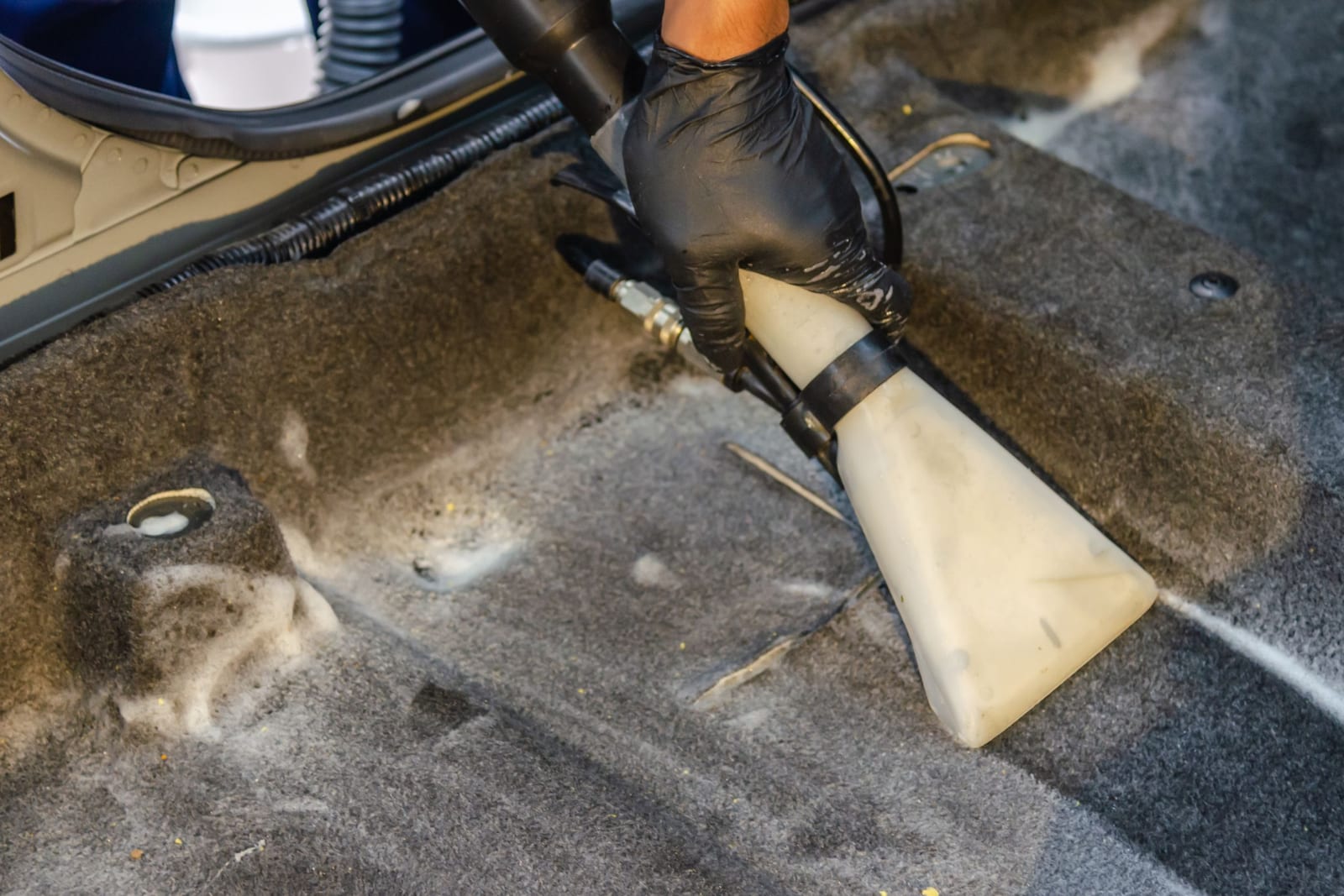
Gloved hand working an extraction wand across a car's dirty floor carpet, pulling embedded grit out of the pile

Extraction pulls grit and moisture out of the carpet pile. If the musty smell survives this, the water is in the foam padding below it — and that needs forced drying, not another clean.

Stop and Check

A sweet, almost syrupy smell that intensifies when you turn the heat on isn't a detailing issue. Paired with a greasy film on the inside of the windshield or a damp passenger footwell, it's the classic signature of a coolant leak from the heater core. Get that looked at by a mechanic first — cleaning the interior won't stop it, and the smell returns until the leak is repaired.

Sticky Cupholders: Why Wiping Never Works

A sticky cupholder is almost always dissolved sugar — soda, sweetened coffee, juice, energy drinks. When it spills, the liquid doesn't sit politely in the well. It runs down through the drain slot, into the seams where console panels meet, under the removable rubber liner, and often into the tray below. The water evaporates; the sugar stays.

Here's why wiping fails: a damp cloth re-dissolves the sugar at the surface and spreads a thin film across a wider area, where it dries again. The cupholder feels clean for a day or two, then humidity pulls moisture back into that film and the tackiness returns. Nothing was removed — it was relocated.

What actually works is heat, agitation, and removal. Take the rubber or plastic liner out entirely if your car has one and wash it separately. Steam softens residue that has set into the seams so a detail brush can lift it out, and it reaches the gaps between console panels where a cloth physically cannot. Then everything gets wiped away rather than pushed around.

The same logic applies everywhere sugar goes: door pockets, the shifter surround, the underside of the console lid, and the small tray where phones and change live. If one cupholder is sticky, check those too — they're usually part of the same spill.

Stained Seats: Which Ones Come Out and Which Ones Don't

This is where honest expectations save everyone frustration. Not all discoloration is a stain, and not all stains are removable. Before you book, figure out which of these four you're looking at.

  1. Water-based stains — coffee, soda, juice, mud, most food spills. These sit in the fiber and respond very well to hot-water extraction. Realistic outcome: gone or nearly gone, even months later.
  2. Oil-based stains — grease, salad dressing, sunscreen, makeup, fryer oil. These bond to the fiber and need a solvent-based pre-treatment before extraction. Realistic outcome: substantially lighter, often fully gone, occasionally a faint shadow remains.
  3. Dye transfer — the blue tint dark denim leaves on light cloth or leather, or color from a spilled hair product. This isn't residue sitting on the fiber; the dye has moved into it. On leather it can sometimes be reduced with dedicated cleaners. On light-colored cloth it usually can't be fully reversed.
  4. Fading and damage — sun-bleached fabric, bleach spots, cracked or worn leather. There's nothing to remove. The material itself has changed, and cleaning can't restore color that's gone. That's repair or reupholstery territory, not detailing.
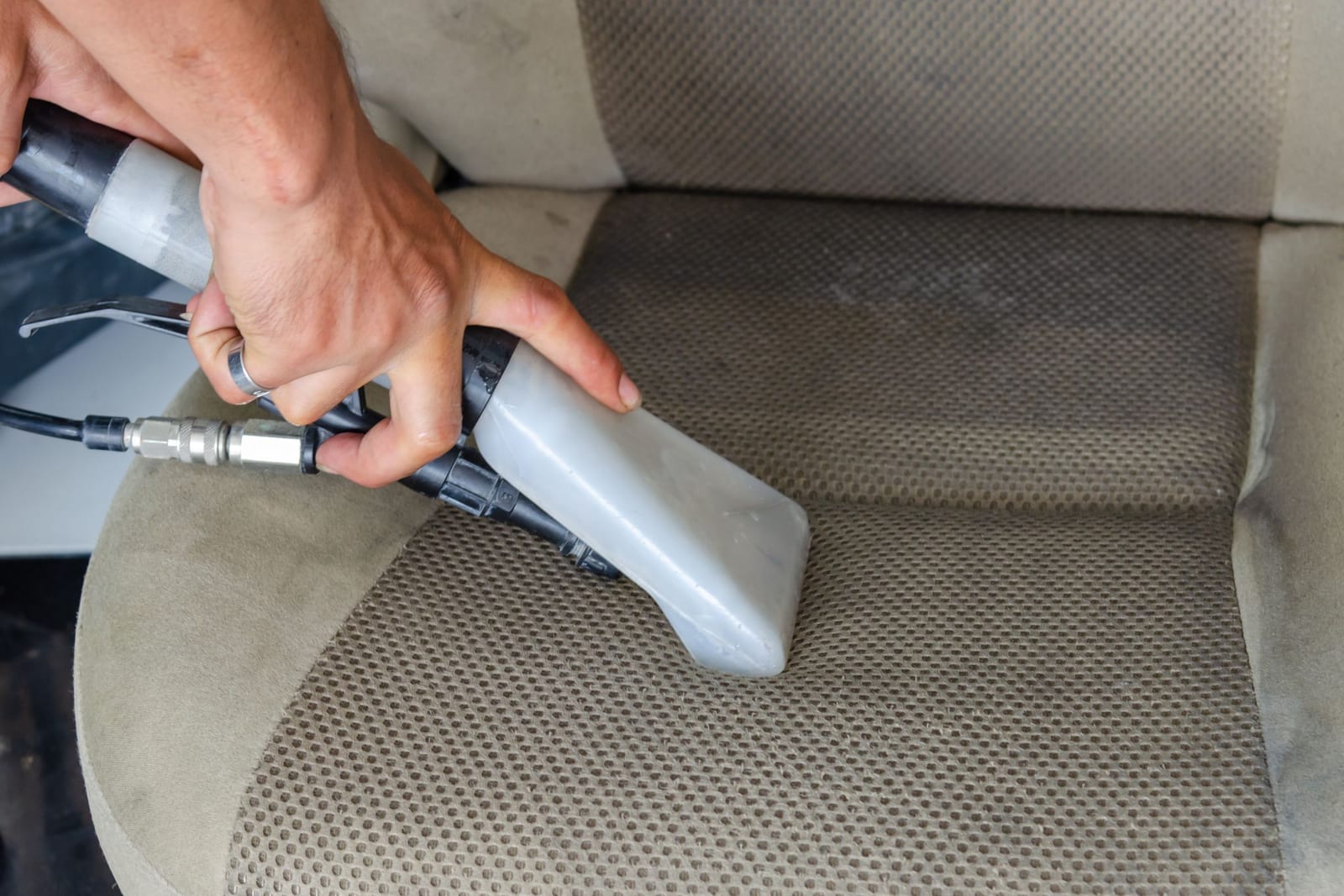
Hot-water extraction wand drawing a set-in stain out of a car's cloth seat, the cleaned strip visibly lighter than the fabric beside it

Hot-water extraction on cloth: the stain is lifted out of the fiber and pulled back into the machine, rather than scrubbed deeper into the padding underneath.

Material matters as much as the spill. Cloth absorbs quickly and needs extraction to pull the stain up and out. Leather and vinyl mostly resist absorption, which is good news — but perforated leather is different, because liquid runs straight through the holes into the foam beneath, where a surface wipe never reaches. Leather also needs conditioning after cleaning, since aggressive cleaners strip the finish and leave it dry and prone to cracking.

One more thing worth knowing: a "stain" on a seat bolster that's shiny and darker than the rest is often not a stain at all. It's body oil and denim wear polished into the leather over years. That does clean up, but it takes a proper leather cleaning process rather than a wipe.

The 20-Minute Triage You Can Do This Weekend

Before you book anything, do this. It costs nothing, it fixes some problems outright, and it tells you exactly what to say when you call.

  1. Empty the car completely. Everything out — floor mats, trunk contents, door pockets, the space under the seats. A surprising number of mystery smells turn out to be a forgotten gym bag or something that rolled under a seat months ago.
  2. Press the carpet with your palm. Front footwells, rear footwells, and the spare tire well under the trunk floor. If any spot is cool and damp, you've found your musty smell — and probably a water leak.
  3. Pull the removable cupholder liners. Wash them in the sink with warm water and dish soap. This alone solves a fair number of sticky-cupholder complaints.
  4. Run the fan on fresh air, then on recirculate. If the smell is worse on fresh air, it's coming through the intake or the evaporator. If your cabin air filter hasn't been changed in a couple of years, that's inexpensive to replace and is sometimes the whole fix.
  5. Blot fresh stains — never scrub them. Press a clean white towel straight down to lift liquid out. Scrubbing drives the stain deeper into the padding and frays the fiber, which leaves a permanent fuzzy patch even after the color is gone.
  6. Photograph what's left. Stains, damp areas, anything you couldn't fix. Send those with your quote request and the estimate you get back will be a real number.
Three Things Not to Do

Don't soak cloth seats with a rental carpet machine — home units inject far more water than they recover, and the padding stays wet for days, which creates a mildew problem worse than the stain you started with. Don't use kitchen degreasers or all-purpose cleaners on leather or dashboards; they strip the protective finish and cause cracking that no detail reverses. And don't take an abrasive melamine sponge to interior surfaces — it dulls textured plastic permanently.

When It Isn't a Cleaning Problem At All

Some interior symptoms are mechanical. Detailing those is treating the symptom while the cause keeps producing it, and the smell comes back within a few weeks every time. These are worth ruling out first.

  • Clogged sunroof drains. Cars with sunroofs have drain tubes running down the pillars. Pine needles and pollen block them — a real issue in wooded New England neighborhoods — and water backs up into the headliner or the footwell. If your carpet is wet only after rain, this is the usual culprit.
  • A tired cabin air filter. Dust, leaves, and moisture collect in the filter housing. It's an inexpensive part, and on plenty of cars it's the entire explanation for a stale smell that arrives every time the fan turns on.
  • Mold on the A/C evaporator. Condensation on the evaporator core feeds mold growth, which produces the sharp, sour blast some cars give off in the first ten seconds of A/C. Cleaning your carpets does nothing for it — the ventilation system has to be treated directly.
  • A failing door, trunk, or windshield seal. Water entering slowly at the edges soaks carpet padding from below and can go unnoticed for months, until the smell shows up.
  • A heater core leak. The sweet-syrup smell described above, often with a greasy windshield film. Mechanic first, always.

A good detailer will tell you when you're in this territory instead of selling a service that can't solve it. If a shop takes your money for odor removal on a car with a standing water leak and never mentions the leak, that tells you something about the shop.

Matching the Diagnosis to the Right Service

Once you know which problem you have, picking the service is straightforward. Our interior detailing package starts at $199 and covers a full vacuum, shampoo of carpets, seats, and panels, door jambs, interior glass, and a wipe-down of the dash, console, and vents. That handles the everyday version of all three complaints — normal grime, ordinary spills, a cabin that's simply overdue.

Beyond that, add-ons exist because some problems need a different process, not more time. Odor removal uses steam and optional ozone treatment for deep odors that survived a standard clean. Deep cleaning targets set-in stains that need extraction rather than shampoo. Upholstery care conditions leather or fabric afterward, which matters most on older leather that's already dry. And if the exterior needs attention in the same visit, the full service detail starts at $299 and covers both sides in one appointment instead of two.

What actually determines your quote is condition, not car size alone. A three-year-old commuter that's just dusty and a same-model car with a two-year-old milk spill in the rear footwell are completely different jobs. That's why the details you give at booking matter so much, and it's the same reason we walk around the car before starting rather than committing to a number sight-unseen.

Tell us these things when you book and the quote will hold: what the smell is like and when it started, whether it changes with the fan on, what spilled and roughly when, whether the carpet has ever been soaked, whether anyone smoked in the car, and whether pets ride in it. For upkeep between visits, our summer interior checklist covers the weekly habits that keep small problems from becoming the ones above — and if you want the case for why interior buildup matters beyond appearance, we wrote about that in why interior detailing is about more than looks.

Frequently Asked Questions

Why does my car still smell musty after I cleaned it?
A musty smell almost always means moisture is still present somewhere the cleaning didn't reach — usually the foam padding under the carpet, or the evaporator core behind the dash. Surface cleaning dries in an hour and the smell returns on the next humid day. The fix is hot-water extraction that pulls moisture and organic material out of the padding, plus forced drying, rather than another wipe-down or an air freshener.
Why do my cupholders get sticky again a week after cleaning?
Because wiping a cupholder mostly redistributes dissolved sugar rather than removing it. Soda and coffee residue runs down into the seams, the shifter surround, and the console tray below, so the film re-forms as soon as humidity brings it back to the surface. Steam plus agitation in the seams — with removable liners taken out and washed separately — is what actually ends the cycle.
Can a detailer remove every stain from my seats?
No, and any shop that promises otherwise is overselling. Water-based and most food or protein stains come out well with extraction. Oil-based stains usually lighten substantially. Dye transfer from denim, bleach damage, and sun-faded fabric are not stains sitting on top of the fiber — the fiber's own color has changed, and cleaning cannot restore it. We tell you which category your stain falls into before you book.
My car smells sweet, almost like syrup. Is that a detailing problem?
That one is worth a mechanic's look before a detailer's. A sweet, syrupy smell that gets stronger with the heat on is a classic sign of a coolant leak from the heater core, often paired with a greasy film on the inside of the windshield or a damp passenger carpet. Cleaning the interior will not fix the source, and the smell comes back until the leak is repaired.
Does ozone treatment get rid of smoke smell for good?
Ozone helps, but only after the residue is physically removed. Smoke leaves a sticky film on the headliner, the glass, the vents, and every plastic surface, and ozone treats the air rather than the film. We clean the surfaces and the vents first, then use steam and optional ozone as the finishing step. Heavy long-term smoke cars can take more than one visit, and some headliners never fully release it.
What should I tell the shop when I book?
Describe the symptom, when it started, and whether it changes with the weather or with the fan on. Say what spilled and roughly when, whether anyone smoked in the car, whether pets ride in it, and whether the carpet has ever been soaked. Those details decide whether your appointment needs an extraction step, an odor removal add-on, or just a standard interior detail — and they are what make a quote accurate instead of a guess.

The Bottom Line

Odors, stickiness, and stains look like one problem and behave like three. The smell is usually moisture or organic material below the surface. The stickiness is sugar in the seams that wiping only spreads. The stains fall into categories, and knowing which one you have sets a realistic expectation before any money changes hands. Spend twenty minutes emptying the car, pressing the carpet, and pulling the cupholder liners, and you'll know whether you need a standard interior detail, an add-on, or a mechanic — a much better place to book from than "my car is gross."

"If the smell comes back, it was never removed — it was covered."

— The Avid Auto Standard

Tell Us What's Wrong Inside

Describe the smell, the spill, or the stain — we'll tell you honestly what comes out, what doesn't, and what it takes.

Get Free Quote

About Avid Auto Detailing

Arthur and the Avid Auto Team detail vehicles from our climate-controlled shop at 15 Central St in Derry, NH, serving drivers across southern New Hampshire and the Merrimack Valley. Interiors are a large share of what rolls through our bays — spills, pet hair, smoke, and the moisture problems that come with New England weather — and every one of those jobs starts with figuring out what's actually causing the symptom.

Fully Insured and backed by a 5.0-star rating from 100+ Google reviews. If your interior needs more than a cleaning, we'll say so before you book interior detailing or a full service detail.

"Detail Obsessed – Eco-Smart Products"