Paint Correction

Paint Correction for Ceramic Coating: Are the Swirls in the Coating or the Paint?

Your car is coated, and you can still see spider-web swirls in the low winter sun. Here's how to work out where the problem lives, and when correction and a fresh coat is the real fix.

↓

A ceramic coating is supposed to make paint look its best for years. So it's frustrating to pull into a parking lot in Derry or Manchester on a bright December afternoon, look down the hood, and see fine circular scratches catching the light. A lot of coated-car owners assume the coating has failed. Sometimes it has worn. More often the swirls are somewhere else entirely.

There are three places a swirl or a patch of haze can live on a coated car: on top of the coating, in the coating itself, or in the paint underneath it. Each has a different cause and a different fix, and only some of them call for a machine polisher. This guide walks through how to tell them apart, what you can check yourself, and when paint correction followed by a new coating is the right answer.

The Short Answer

  • On top of the coating: traffic film, mineral spots, or a smeared topper. Gone after a proper wash and decontamination. No polishing needed.
  • In the coating: light wash marring in the coating's surface. Sometimes refined with a very fine polish, but polishing thins or removes the coating on that panel, so it needs a fresh layer afterward.
  • In the paint under the coating: swirls that were there before the coating went on, or scratches deep enough to cut through it. Only paint correction fixes these, and correction removes the coating, so it always ends with a re-coat.
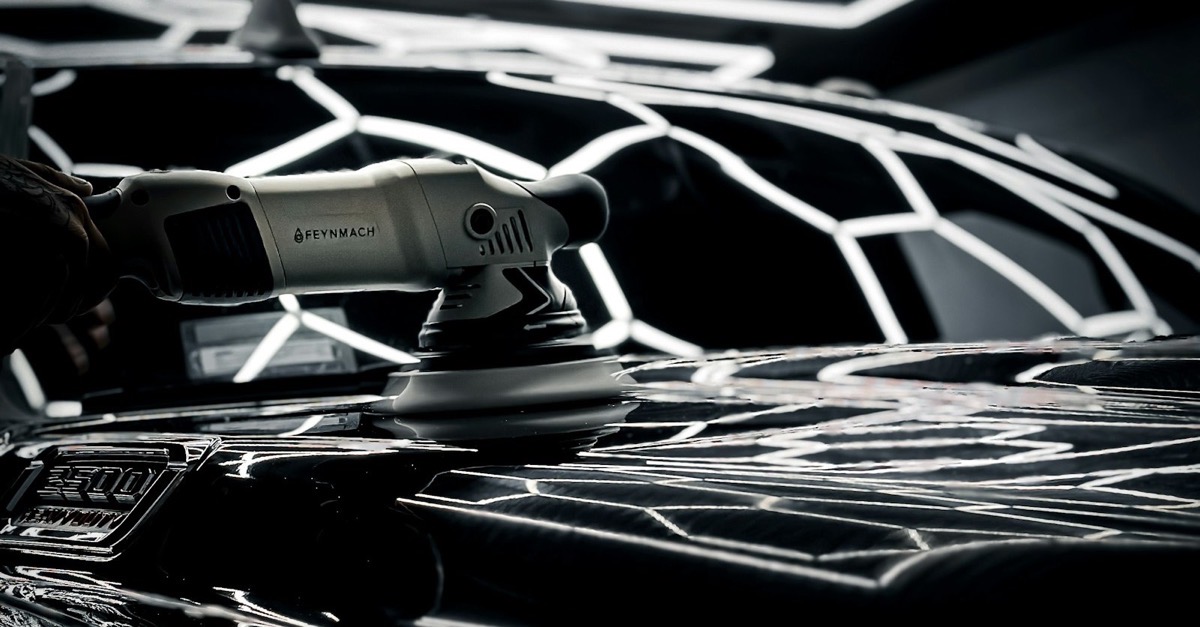
Dual-action machine polisher working on the glossy black hood of a pickup truck under hexagon shop lights

First, Make Sure the Car Is Actually Coated

This sounds obvious, but it changes everything that follows. Plenty of cars arrive at our shop described as "ceramic coated" when what they actually have is a dealer-applied sealant, a spray product, or a coating whose useful life ended a while ago. If there's no coating left, you're simply looking at swirled paint, and our guide to why paint looks swirled, hazy, or spotted is the better starting point.

How to tell if a car has ceramic coating

  • Check the paperwork. A professional coating comes with an installer's invoice and a warranty registration. Every coating we apply is also recorded with Carfax, so it shows up in the vehicle's service history. Bought the car used? The history report is worth a look.
  • Feel a clean panel. After a wash, a coated surface is noticeably slick. A microfiber glides across it with almost no drag.
  • Watch the water. On a clean coated panel, water pulls into tight, round beads or sheets off quickly. Check more than one panel, because the hood, roof, and lower doors wear first.
  • Don't rely on beading alone. A fresh wax or spray sealant beads water too, for a few weeks. If the beading disappears after a month of washes, it probably wasn't a multi-year coating.

Once you're reasonably sure there's a real coating on the car, you can start sorting out where the swirls are.

The Three Places Swirls Can Live on a Coated Car

A professional coating is a very thin, hard, clear layer bonded to the clear coat. It's tougher than bare clear coat, but it isn't scratch-proof, and because it's optically clear it shows you everything underneath it. That's why a defect can look identical whether it's above, in, or below the coating.

Where it lives What it usually looks like Typical cause The fix
On top of the coating A dull, gray film; round mineral rings; streaky or oily-looking patches Road film and brine, well-water or sprinkler spots, a topper or quick detailer that wasn't buffed off A careful wash, iron and fallout decontamination, and a coating-safe water-spot remover
In the coating Very fine, shallow swirls or light marring that appeared gradually, mostly on the hood, roof, and doors Brush washes, dirty mitts or towels, dry-wiping dust or pollen Light refinement and a fresh coating layer on the affected panels
In the paint underneath Swirls visible from day one, or deeper scratches and etching that cut through the coating Coating applied over uncorrected paint, hard wash damage, bird-dropping or water-spot etching left too long Paint correction, which removes the coating on those panels, then a new coating
Leftover from the install Dark, smudgy patches or rainbow-tinted streaks that don't wash off, often on edges or lower panels "High spots," where excess coating wasn't leveled before it cured Polishing the high spot level, then re-coating that area

Notice the pattern in the right-hand column. Anything that sits on the coating comes off with cleaning. Anything in or under the coating means polishing, and polishing and coatings don't coexist on the same panel: the polish takes the coating with it.

A Driveway Diagnosis in Five Steps

You don't need professional tools to narrow it down. You need a clean car, a bright LED flashlight or direct sun, and about fifteen minutes. In a New Hampshire winter, wait for a day above freezing or do this in a garage after the car has warmed up.

  1. Wash and decontaminate before you judge anything. A two-bucket wash with a pH-neutral shampoo, then an iron remover on the paint. Winter brine and brake dust leave a film that looks exactly like haze. If the problem disappears here, it was on top of the coating and you're done.
  2. Ask when it showed up. Swirls that were visible the week you picked the car up were almost certainly sealed in under the coating, or are high spots from the install. Swirls that crept in over a season or two came from how the car has been washed since.
  3. Look at the pattern under raking light. Hold the flashlight low so the beam skims across the panel. Fine circular scratches that seem to rotate as you move are wash swirls. A dark, smeary patch with a faint rainbow tint is a high spot. Round rings that stay put from every angle are water spots, and if they survive the decontamination they've etched.
  4. Compare the water behavior. Mist the swirled panel and a panel that looks clean. If both bead tightly, the coating is still there and the marring is likely shallow. If the swirled panel lets water lie flat and cling while the other beads, the coating has worn or been scrubbed thin in that area.
  5. Run a fingernail across the worst single scratch. If your nail glides over it, it's a candidate for polishing. If it catches, the scratch has gone through the coating and deep into the clear coat or beyond. Polishing can improve it, but it may not remove it.

Avid Tip Don't reach for a polish, a "scratch remover," or a clay bar to test your theory. On a coated car, each of those can strip or mar the coating you're trying to diagnose. If the five steps point to polishing, the next step is an inspection, not a product.

When Paint Correction Is the Right Fix

Paint correction is machine polishing that levels the clear coat down to the bottom of the defects. On a coated car, the polisher has to go through the coating first, so correction always means two things: removing the coating on the panels being corrected, and applying a fresh one afterward. That's the honest meaning of paint correction for ceramic coating. It's a reset, not a touch-up.

Correction and a re-coat make sense when

  • The swirls were sealed in. If the coating went on over swirled paint, nothing short of correction will remove them. This is the most common case we see, and it's why every coating we apply starts with correction.
  • The coating is worn through on the high-wear panels. After years of brush washes, the hood and roof often have both a thin, tired coating and marring in the clear coat beneath it.
  • There are high spots or etching you can't live with. These are localized, so the work can often stay on the affected panels.
  • You plan to keep the car. A fresh coating over corrected paint resets the clock on protection for years.

It's not the right fix when

  • The problem washed off. Film and fresh spots sit on top. Decontamination and a coating-safe topper bring most coatings right back.
  • The coating is still under warranty and was applied elsewhere. Call the original installer first. Many coating warranties depend on the installer's own inspection, and polishing by another shop can end that coverage.
  • The scratch has gone through the clear coat. If it has reached the color layer, polishing can't restore it. It needs touch-up paint or refinishing.
  • The marring is light and the coating is healthy. Sometimes a professional decontamination and a maintenance layer is all the car needs, and correction can wait.

Correction also removes a small amount of clear coat every time, and clear coat doesn't grow back. That's one more reason to fix the cause of the swirls before paying to remove them. Our breakdown of one-step vs. multi-step correction and what each costs explains how a shop decides how much polishing your paint actually needs.

How We Correct and Re-Coat at Our Derry Shop

Every correction and coating we do happens inside our climate-controlled shop at 15 Central St in Derry, with lighting that's harsher than sunlight on purpose. If it's there, we'll find it. Here's the order of work when a coated car comes in with swirls:

  1. Inspection under shop lighting. We sort what sits on the coating from what's in it or beneath it, and note repainted panels, edges, and anything that's been polished hard before.
  2. Wash, iron decontamination, and clay. Bonded contamination comes off first, so the polisher never drags grit across the panel.
  3. A test section. We start with the least aggressive polish and pad on a small taped-off area. If that removes the old coating and the defects, that's the plan. If not, we step up and tell you before going further.
  4. Correction across the panels that need it. Paint depth readings on edges and body lines decide how far it's safe to go. Some deep defects are better improved than chased.
  5. A fresh coating. Applied and cured in the shop, away from dust, pollen, and slush.

Every System X package on our ceramic coating page already includes decontamination and a one-step paint correction. For a coupe or sedan, the 2-Year Ceramic currently starts at $1,099, the 6-Year at $1,399, and the 10-Year at $1,599, with SUVs, trucks, and vans priced higher. If your paint needs more than one step to look right under the new coating, the extra steps are quoted in writing before any polishing starts.

"A coating locks in whatever is underneath it. That's why the correction comes first, every time."

— The Avid Auto Standard

Keeping the Swirls From Coming Back

Correction removes swirls. It doesn't stop new ones. Nearly all swirls on a coated car are wash-induced, so the fix that lasts is how the car gets washed through a New Hampshire winter:

  • Skip the brush and soft-cloth tunnels. They carry grit from every car ahead of you and mar the coating first, then the paint.
  • Use two buckets and a clean mitt. Rinse the mitt after every panel, wash top down, and leave the salty lower panels for last.
  • Rinse before you touch. Salt, sand, and pollen are abrasive. Get them off with water before the mitt goes on the paint.
  • Dry with a plush towel or a blower. Blot rather than scrub, and never reuse a towel that touched the ground.
  • Top up, don't polish. A coating-safe silica topper every one to three months keeps the surface slick, so dirt releases instead of grinding in.

Those habits matter most from November through March, when every drive adds a fresh layer of salt and sand to the lower panels.

Frequently Asked Questions

Can a ceramic-coated car go through a car wash?
Avoid brush and soft-cloth tunnel washes. The wash media carries grit from every car ahead of you, and it can mar both the coating and the paint under it. A touchless wash is the safer fallback when a hand wash isn't possible, but its strong pre-soak chemicals wear a coating's slickness down faster if you use it every week. Treat touchless as an occasional backup.
What are the different types of ceramic coating?
There are three broad types. Spray ceramic sealants and toppers last weeks to a few months. Consumer DIY coating kits are applied by the owner and are commonly marketed at one to a few years if the prep is right. Professional, installer-only coatings such as System X are applied over decontaminated, corrected paint and are backed by multi-year warranties. Coatings are also made for specific surfaces, including wheels, glass, trim, and interiors.
How much does a 1 year ceramic coating cost?
We don't sell a 1-year professional coating. Our shortest package is the 2-Year Ceramic, which currently starts at $1,099 for a coupe or sedan and includes decontamination and a one-step paint correction. One-year protection is usually the territory of spray sealants and entry-level DIY kits.
How much does a 7 year ceramic coating cost?
Our packages are rated for 2, 6, or 10 years rather than 7. For a coupe or sedan, the 6-Year Ceramic currently starts at $1,399 and the 10-Year Ceramic at $1,599, with SUVs, trucks, and vans priced higher. Both include decontamination and a one-step correction; paint that needs more correction is quoted up front.
Is ceramic coating 100% safe?
For your paint, a professionally applied coating is safe: it bonds to the clear coat as a thin protective layer and comes off only through polishing. Nothing is 100% protective, though. A coating won't stop rock chips or deep scratches, and the real risks come from poor installation, such as coating over swirls or leaving high spots. Application is done with gloves and ventilation in a controlled shop.
Which is better, ceramic coating or PPF?
They do different jobs. A ceramic coating adds gloss, makes washing easier, and helps paint resist salt, droppings, sap, and UV, but it won't stop rock chips. Paint protection film is a physical urethane layer that takes the impact of stones and self-heals light scratches. Many drivers put film on the front end, where chips happen, and coat the rest of the car.
How does PPF look after 5 years?
A quality film that was installed well and washed properly should still look clear at five years. The Stek film we install is made to resist yellowing and self-heal light scratches, and its 10-year manufacturer warranty covers yellowing, cracking, bubbling, and delamination. Expect some marks where stones hit hard and a little dirt at the edges if they aren't cleaned.
How to tell if a car has ceramic coating?
Check the paperwork first: a professional coating comes with an installer's invoice, a warranty registration, and often a Carfax service record. On the car, a clean coated panel feels very slick, and water forms tight round beads or sheets off quickly. Check more than one panel, because the hood and lower doors wear first. Beading alone isn't proof, since a wax or spray sealant beads too for a few weeks.

The Bottom Line

Swirls on a coated car don't automatically mean the coating failed, and they don't automatically mean paint correction. Wash and decontaminate first. If the problem is gone, it was sitting on top. If it's still there, think about when it appeared and how the water behaves on that panel. Swirls that were there from day one, or that have worn through the coating, live in the paint, and the only lasting fix is correction followed by a fresh coat.

Not sure which one you're looking at? Send us a few photos taken in raking light, and tell us when the coating went on and who applied it. We'll tell you honestly whether it needs a wash, a maintenance visit, or correction.

Get an Honest Read on Your Coating

Tell us what you're driving and when it was coated, and send photos of the worst panels. We'll recommend the least aggressive fix that gets the result.

Request a Quote

About Avid Auto Detailing

The Avid Auto Detailing team has detailed more than 5,000 vehicles since 2021, working from a climate-controlled shop at 15 Central St in Derry, NH, and serving drivers across southern New Hampshire and the Merrimack Valley. We're certified in paint correction and ceramic coating application, and we apply ceramic coatings as an authorized System X installer.

Fully Insured — and every service is backed by our 100% satisfaction guarantee.

"Detail Obsessed – Eco-Smart Products"