Paint Correction

Paint Correction Cost in Londonderry, NH: One-Step vs. Multi-Step Polish

Why one quote says $400 and another says $1,600 for “the same thing” — and how a shop decides how much polishing your paint actually needs.

↓

Ask three shops around Londonderry what paint correction costs and you can easily get three answers that are a thousand dollars apart. That isn't usually a sign that somebody is overcharging. It's a sign that “paint correction” covers everything from a single gloss-boosting polish on a two-year-old car to two or three days of careful work on a neglected black truck.

The single biggest thing that moves the price is how many polishing steps the paint needs. This guide explains what those steps are, gives you realistic price ranges for each, and walks through how a shop decides which one your car falls into — so you can read a quote, compare it fairly, and spend only what your paint actually calls for.

The Short Answer

  • One-step polish: roughly $300–$700 for a sedan. Best for light swirls and newer cars.
  • Two-step correction: roughly $700–$1,200 for a sedan. The usual fit for a daily driver with years of wash marks.
  • Multi-step correction: roughly $1,200–$2,000+ for a sedan. For heavy swirls, etching, or oxidation.
  • Bigger vehicles: SUVs, trucks, and minivans typically run 20–40% higher at every level.
  • What decides it: how deep the damage is, how much clear coat you have to work with, and how much surface there is to polish.

These are typical ranges for shop-based correction across southern New Hampshire and northern Massachusetts, not a quote. A firm number should come after someone has looked at your paint under proper lighting.

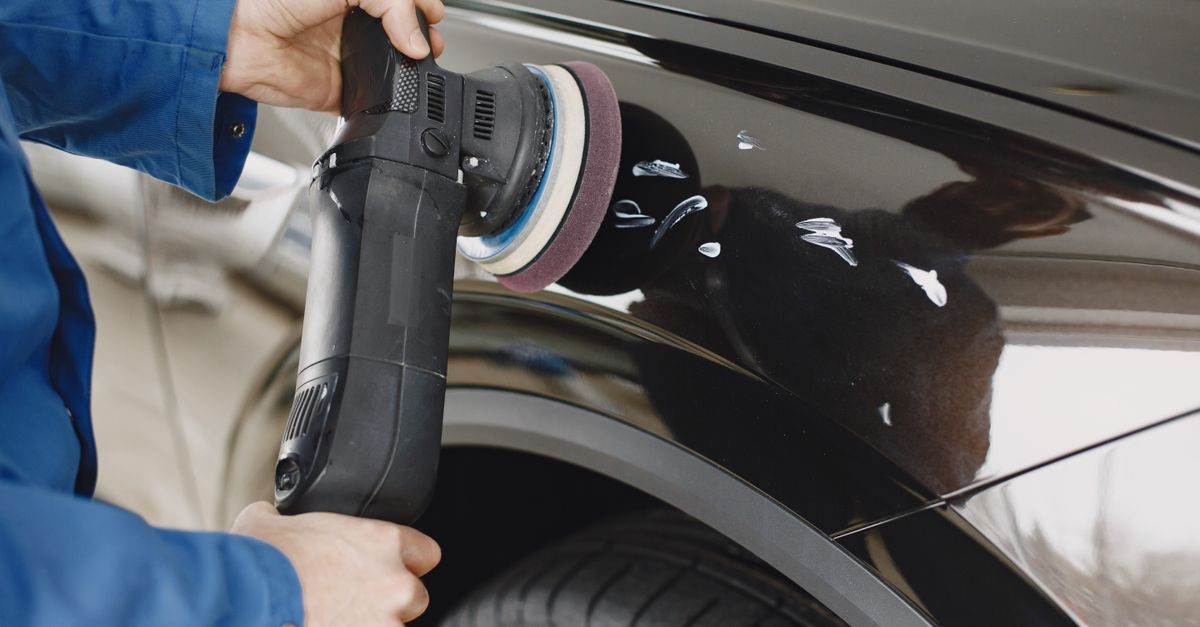
Detailer holding a dual-action polisher against the glossy black rear fender of a car dotted with polish

Five Terms That Make Any Quote Easier to Read

Correction quotes are full of shop vocabulary. Here's what it means in plain English:

  • Clear coat is the transparent top layer of your car's paint. Swirls, light scratches, and water-spot etching live in this layer, and correction works only in this layer. It's thinner than a sheet of paper.
  • Paint correction means machine-polishing the clear coat until it's level with the bottom of the defects. The scratches aren't filled or hidden; the surface around them is carefully shaved down so they disappear.
  • Compound is the more aggressive abrasive. It cuts faster and removes deeper defects, but it leaves a fine haze of its own.
  • Polish is the finer abrasive. It removes lighter defects and the haze a compound leaves behind, and it's what brings out the gloss.
  • A “step” or “stage” is one full pass over the car with one product and pad combination. A one-step uses a single combination; a two-step is compound, then polish; a three-step adds a final finishing polish.
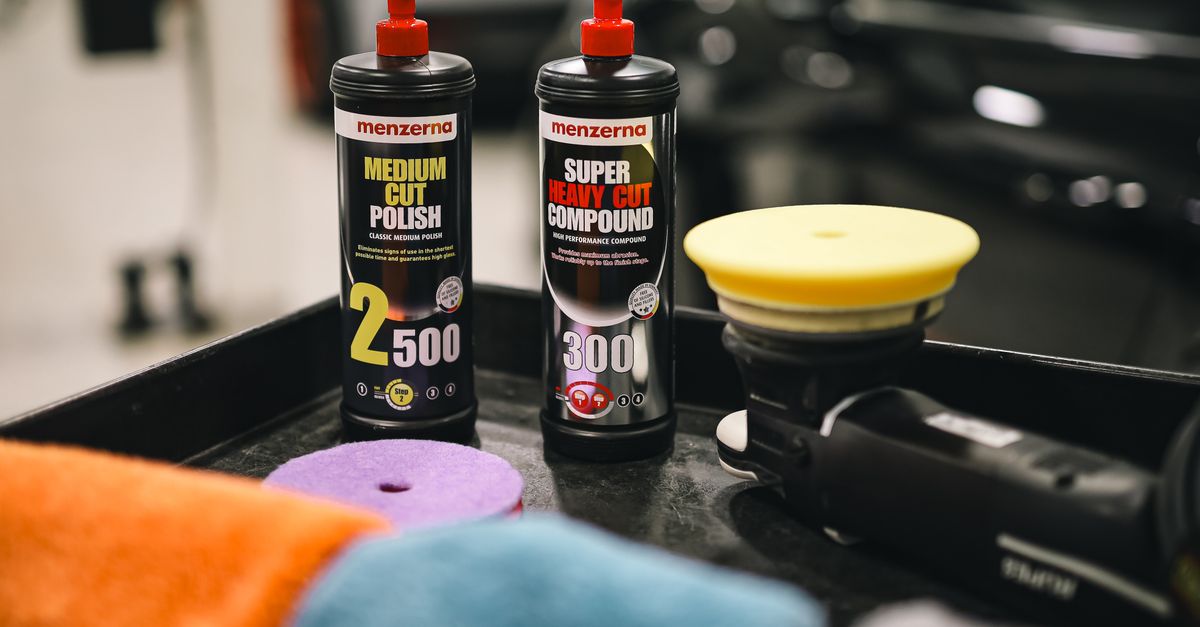
Bottles of heavy-cut compound and medium-cut polish beside a dual-action polisher and foam pads on a shop cart

Paint Correction Prices by Level

Here's how the three levels compare side by side. The price ranges are typical, the hours are hands-on polishing time after washing and decontamination, and every car is a little different.

Level What it fixes Sedan / coupe SUV / truck / minivan Time in the shop
One-step polish Light wash swirls, dealer-prep marring, dullness. Typically removes a large share of light defects and restores gloss. About $300–$700 About $450–$900 Most of a day
Two-step correction Moderate to heavy swirls, light scratches, water-spot etching, early haze. Compound first, then polish to finish. About $700–$1,200 About $900–$1,600 One to two days
Multi-step correction Severe swirls, deep etching, oxidation, and paint that needs extra work on specific panels. Three or more steps, often with spot work. About $1,200–$2,000+ About $1,500–$2,500+ Two to four days

Notice that the jump between levels is mostly time. The products on the shelf don't cost much more for a two-step than a one-step; the extra money pays for the extra hours of careful machine work, panel by panel. That's also why a very low quote for “full paint correction” deserves a question: there's only so much polishing that fits into a couple of hours.

If you're pricing correction alongside a regular detail, our guide to what car detailing near you actually costs covers the cleaning side of the bill and why the two are quoted separately.

How a Shop Decides Between a One-Step and a Multi-Step

A good shop doesn't pick the level from a menu. It reads the paint first. Here are the four things that decide where your car lands, roughly in order of how much they move the price.

1. How deep the damage goes

This is the big one. Fine, shallow swirls — the kind that only show up in direct sun — sit near the surface and come out with a polish. Deeper swirls, straight-line scratches, and etching from bird droppings or water spots sit lower in the clear coat, and only a compound cuts down far enough to reach them. Once a compound is used, a second polishing step is needed to clear the haze it leaves.

You can get a rough read yourself. Look at the hood under a bright LED flashlight or in direct sun. If you see a light spider-web pattern that fades when you step back, that's one-step territory. If the swirls are visible in shade, or you see dull rings and outlines where droppings or sprinkler water sat, expect a two-step at least. Our five-minute test for swirled, hazy, or spotted paint walks through it in more detail.

2. How much clear coat there is to work with

Every step of correction removes a tiny amount of clear coat, and clear coat doesn't grow back. Factory clear is thin to begin with, it varies from panel to panel, and some cars have less than others — especially on edges, body lines, and any panel that has been repainted or polished hard before.

That's why a careful shop measures. A paint depth gauge reads the total paint thickness on each panel, and those readings decide how aggressive the work can safely be. Sometimes the answer is that a deep defect should be improved rather than fully removed, because chasing it would leave the panel too thin to protect. A shop that tells you that is protecting the car, not cutting corners.

3. The size and shape of the vehicle

More surface means more hours. A three-row SUV, a full-size pickup, or a minivan has far more paint than a compact sedan, and tall roofs, bumper vents, sharp body lines, and complex trim all slow the machine down. The same two-step that takes one long day on a Civic can take most of two on a Tahoe.

4. The paint itself, and what you want from it

Some factory paints are hard and take longer to cut; others are soft and mar easily, which makes the finishing step slower. Dark colors — black especially — show every remaining flaw, so they often need an extra refining step to look right. Then there's the goal: a car you're selling next spring and a car you plan to keep for ten years don't need the same level of work.

The Test Spot

Before committing to a level, a good shop polishes a small test section — usually on the hood or a door — starting with the least aggressive combination. If a polish alone gets the result, the whole car gets a one-step. If it doesn't, they step up to a compound. That small test is what turns a guessed price into an honest one, and it's the reason the least aggressive approach that works is always the right one.
Three Example Cars, Three Different Answers

To make that concrete, here's how three typical cars on Londonderry roads would usually be scoped. These are illustrations, not real quotes.

A two-year-old compact SUV

Silver paint, washed at home most of the time, a few runs through a brush wash. Light swirls in direct sun and some dealer-prep marring. A one-step polish brings back the gloss and removes most of what's there. Likely at the low-to-middle end of the one-step range, adjusted for SUV size.

A seven-year-old black sedan

Years of automatic washes, swirls visible even in shade, and white water-spot rings on the hood from well-water sprinklers. A test spot shows a polish alone won't do it. A two-step — compound to level the swirls and spots, polish to finish — is the realistic recommendation.

A twelve-year-old red pickup

Hazy, oxidized paint on the roof and hood, etching from bird droppings, and a front fender that was repainted after a fender-bender. Depth readings guide how hard each panel can be worked. A multi-step correction with spot work, on a large vehicle, puts it at the top of the range.

The pickup is also where honest expectations matter most. Correction can make tired paint look dramatically better, but deep scratches through the clear coat and paint that is already too thin can only be improved, not erased. You should hear that before the work starts, not after.

One-Step or Multi-Step: Which Is the Better Investment?

More steps aren't automatically better. Here's an honest way to think about it:

  • Choose a one-step if the car is fairly new, the defects are light, you're preparing it to sell or trade in, or it's going under a ceramic coating and the paint is already in decent shape. You get most of the visual improvement for the least cost and the least clear coat removed.
  • Choose a two-step if the swirls are obvious in everyday light, there's etching you can see from a few feet away, or you plan to keep the car for years and want it to look right under a coating.
  • Choose a multi-step for dark paint you care a lot about, heavily neglected or oxidized finishes, enthusiast or collector cars, or a car you're restoring for the long haul.

There's one more trade-off worth knowing. Because correction removes clear coat, it isn't something you want to repeat every year. The money is best spent when it's followed by protection and a gentle wash routine that keeps new swirls from coming back. A two-step done once and protected well beats a one-step done three times.

What a Correction Price Usually Doesn't Include

When you compare quotes, check what sits inside the number and what doesn't. These are the usual extras or exclusions:

  • Deep scratches and rock chips. Correction can remove up to 90% of surface defects, but anything that has gone through the clear coat needs touch-up paint or refinishing. If your fingernail catches in a scratch, it's probably in this group.
  • Protection afterward. Polished paint has nothing on it. A sealant or a ceramic coating is usually priced separately, unless it's a coating package that already includes the correction.
  • Interior cleaning. A correction is an exterior paint service. If the cabin needs attention too, booking both in one visit is usually cheaper than two separate trips.
  • Trim, glass, and wheels. Faded plastic trim, headlight restoration, and wheel polishing are separate jobs at most shops.
  • Heavy contamination. Paint caked with tar, sap, or iron fallout takes extra decontamination time before polishing can safely start.

Decontamination itself — a thorough wash, iron removal, and clay — should be included in any correction quote. Polishing contaminated paint drags grit across the surface and adds new scratches, so a shop that skips that step is creating the defects it's charging you to remove.

Pairing Correction With a Ceramic Coating

Most people who invest in correction want it to last, and that's where a ceramic coating comes in. A coating is optically clear, so it locks in whatever is underneath it — which is exactly why correction comes first. Coat over swirled paint and the swirls are sealed in for years.

The two together also cost less than booking them separately, because the wash, decontamination, and panel prep only happen once. Every System X ceramic coating package we install at our Derry shop already includes a one-step paint correction, and paint that needs more than that gets a quote for the extra steps up front. If you want to see every stage of that prep in order, our checklist of what happens before a ceramic coating goes on lays it out.

When to Book Paint Correction in New Hampshire

Correction can happen any time of year in a heated, well-lit shop, but the calendar still matters here:

  1. Early fall (September to early November) is the sweet spot. Summer's bug, sap, and bird-dropping damage is done, and correcting and protecting the paint before brine hits the roads means the finish goes into salt season at its strongest.
  2. Spring (April to May) is the other good window. Wait until the last salt has been washed off and the car has had a proper decontamination, so the inspection shows the real paint rather than a film of winter grime. Booking before pollen peaks helps too.
  3. Before winter storage, if you park a summer car from November to April. Correcting and protecting it before it goes under a cover means it comes out in spring looking the way it went in.
  4. Before you sell, give yourself a couple of weeks. A one-step polish is one of the more effective ways to make a used car photograph and show well.

Winter correction is perfectly possible at a shop like ours. The car simply needs to arrive or be washed free of salt first, and it will need a protection plan for the drive home on wet, treated roads.

A Checklist for Comparing Paint Correction Quotes

Two quotes are only comparable if they describe the same work. Ask each shop:

  • How many steps, and on which panels? “Paint correction” alone doesn't tell you anything.
  • Did you inspect the car under proper lighting before quoting? A firm price given over the phone, sight unseen, is a guess.
  • Will you measure paint depth? Especially on older cars and anything that may have been repainted.
  • Will you do a test spot first?
  • Is the wash, iron removal, and clay included?
  • What defects will still be there afterward? A straight answer here is a good sign.
  • What protection goes on after, and is it in the price?
  • How long will you have the car, and is the work done indoors? Dust, sun, and cold all work against polishing.

Getting Paint Correction From Londonderry

Our shop is at 15 Central St in Derry, a short drive from Londonderry, and all correction work is done inside our climate-controlled bays with proper inspection lighting. We look at the paint, take depth readings where they matter, test a section, and then recommend the least aggressive level that gets the result you want, with the price in writing before any work starts. More about how we work with Londonderry drivers is on our Londonderry auto detailing page.

Frequently Asked Questions

How much does paint correction cost in Londonderry, NH?
As a general guide across southern New Hampshire, a one-step polish on a sedan commonly runs about $300 to $700, a two-step correction about $700 to $1,200, and a multi-step correction about $1,200 to $2,000 or more. SUVs, trucks, and minivans usually land 20 to 40 percent higher. Those are typical ranges, not a quote: the real number depends on how damaged the paint is, how much clear coat there is to work with, and the size of the vehicle, which is why a shop should look at the car before naming a price.
What is the difference between a one-step and a multi-step paint correction?
A one-step correction uses a single polish and pad combination that removes light defects and adds gloss in one pass over the car. A multi-step correction starts with a more aggressive compound to level deeper swirls, scratches, and etching, then follows with one or more finer polishing steps to remove the haze the compound leaves behind. More steps remove more damage, but they take more hours and remove more clear coat.
Is a one-step paint correction enough?
For a newer car with light wash swirls, a car you plan to sell soon, or paint that is going under a ceramic coating and only has light marring, a one-step is often the right call. It typically removes a large share of light defects for a fraction of the cost of a full correction. If your car has deep swirls you can see in shade, heavy water-spot etching, or oxidation, a one-step will improve it but will not finish the job.
Can paint correction remove every scratch?
No. Paint correction can remove up to 90% of surface defects, including light scratches, swirl marks, oxidation, and etched water spots. Scratches that have gone through the clear coat into the color layer cannot be polished out completely and need touch-up paint or refinishing. A quick test: if your fingernail catches in the scratch, it is probably too deep to remove fully.
How long does paint correction last?
The defects that are removed are gone for good, because correction levels the clear coat rather than filling it. What decides how long the car stays looking corrected is how it is washed and protected afterward. Brush tunnel washes and dirty towels put new swirls in within a season. A careful hand wash routine and a ceramic coating or sealant keep corrected paint looking right for years.
Should I get a ceramic coating after paint correction?
It is the most common pairing, and for good reason. Correction makes the paint look its best, and a coating helps it stay that way by making the surface slicker, more chemical resistant, and easier to wash through salt and pollen season. Doing both in one visit also avoids paying for the same wash and decontamination prep twice. Every System X ceramic coating package at Avid Auto Detailing includes a one-step paint correction.

The Bottom Line

Paint correction prices vary so widely because the work varies so widely. A one-step polish on a newer car and a three-step correction on a neglected truck share a name and almost nothing else. The level your car needs comes down to how deep the damage is, how much clear coat is left to work with, and how much paint there is to cover.

Get the paint looked at in good light, ask how many steps are being quoted and why, and choose the least aggressive level that gets you the result you want. Then protect it, so you only pay for correction once.

"The right correction is the gentlest one that gets the result. Everything past that is clear coat you'll want later."

— The Avid Auto Standard

Find Out What Your Paint Needs

Bring your car to our Derry shop, just down the road from Londonderry. We'll inspect the paint, test a section, and give you a clear price for the level of correction it actually needs — nothing more.

Request a Quote

About Avid Auto Detailing

Arthur and the Avid Auto Team handle paint correction, ceramic coating, and full-service detailing from a climate-controlled shop at 15 Central St in Derry, NH, serving drivers across Londonderry, Derry, Salem, Windham, Manchester, and Nashua. With more than 5,000 vehicles detailed and 1,000+ coated as an authorized System X installer, we offer interior, exterior, and full service details, paint correction, and ceramic coating packages with up to 10 years of protection.

Fully Insured — a small team that would rather recommend a one-step that works than sell you three steps you don't need.

"Detail Obsessed – Eco-Smart Products"