Paint Protection

Ceramic Coating vs. Wax: Which One Actually Protects Your Car Through a New Hampshire Winter

One lasts weeks. One lasts years. Here's the honest comparison for drivers facing five months of road salt.

If you want the answer without the sales pitch: for a New Hampshire winter, a ceramic coating protects meaningfully better than wax — mostly because wax is usually gone before February. That's the comparison in one sentence. Wax is a seasonal product being asked to survive a five-month chemical assault, and it doesn't.

But "better" isn't the same as "right for you." Wax is cheap, easy, and genuinely useful on the right car. A coating costs more up front and only pays off across multiple winters. Everything below is the detail you need to choose deliberately instead of guessing — what each product actually is, what a NH winter does to both, the cost math per season, and the three situations where wax is still the smarter buy.

The Quick Answer

  • Wax lasts weeks, not seasons. Roughly six to twelve weeks in good conditions — less once brine and sand are involved. A November wax rarely reaches March.
  • A ceramic coating lasts years. Our packages run 2, 6, and 10 years, warranty-backed, installed in one day at our Derry shop.
  • Neither one stops salt from being salt. Both reduce what salt can do; only regular winter washing removes it.
  • Pick wax if you're selling the car soon, it lives in a garage, or you genuinely enjoy waxing it every six weeks.
  • Pick a coating if you're keeping the car through several more winters and want to stop re-protecting it every couple of months.
What You're Actually Comparing

Most of the confusion in the ceramic coating vs wax question comes from treating them as two versions of the same thing. They aren't. One sits on your paint; the other bonds to it.

Wax: a sacrificial layer that sits on top

Carnauba or synthetic wax lays a soft, thin film over your clear coat. It hides light imperfections, adds warm gloss, and beads water nicely. It's designed to be consumed — every wash, every rainstorm, every stretch of salted highway takes a little of it away. That's not a defect; it's how the product works. Wax or sealant is included in our exterior detailing package, which starts at $199.

Ceramic coating: a hard layer bonded to the clear coat

A professional coating cures into a rigid, glass-like layer chemically bonded to the paint rather than resting on it. It's far more chemically resistant, dramatically slicker, and measured in years rather than weeks. It also demands real prep — decontamination and paint correction first — because whatever is under the coating gets locked in with it.

There's a third category people run into at the auto parts store: ceramic sprays and sealants. Those live between the two, and in how long they last they're much closer to wax than to a professional coating. We broke that distinction down separately in ceramic coating vs. ceramic sealant — worth reading if a spray-on product is what you're actually weighing.

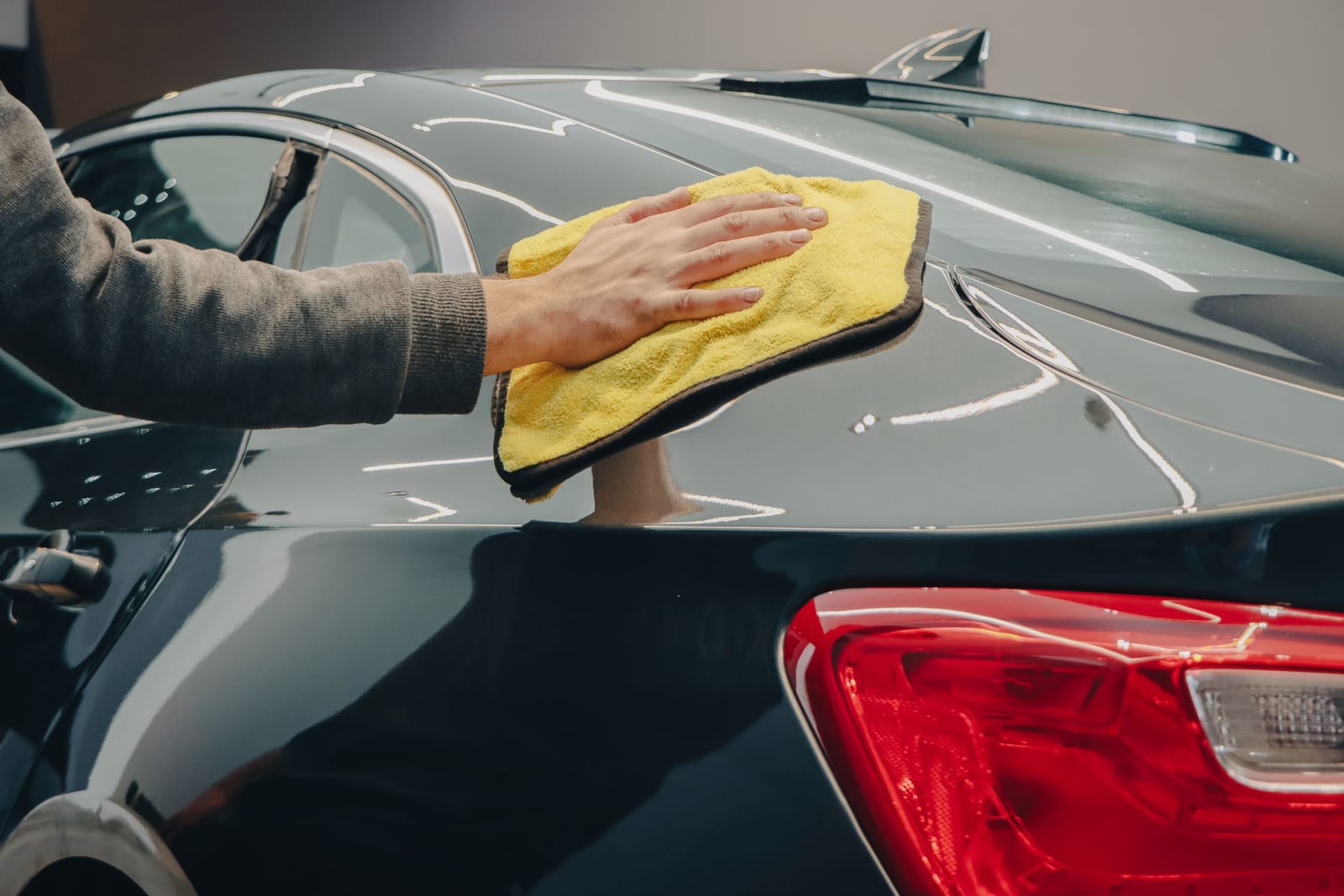
Hand buffing a yellow microfiber cloth across the glossy paint of a dark car, the by-hand application a coat of wax requires

Wax goes on by hand and comes off the same way — a little with every wash, every storm, and every salted mile. That's the product working as designed, not failing.

What a New Hampshire Winter Actually Does to Paint

This is the part that decides the comparison, because a NH winter isn't just "cold weather." It's four specific attacks running at once, from roughly November through March.

Brine, not just rock salt. Liquid brine gets pre-applied to roads ahead of storms and clings to lower panels, rocker areas, and wheel wells far more stubbornly than dry salt. It stays wet longer, which means it stays chemically active longer. This is the single biggest threat to a New Hampshire finish, and we went deep on it in why NH road salt is a chemical threat.

Sand and grit abrasion. Sanded roads throw abrasive material at your paint at highway speed all winter. Sand doesn't dissolve wax — it scours it, along with the top of your clear coat.

Freeze-thaw cycling. Southern New Hampshire spends much of the winter oscillating around freezing. Moisture carrying dissolved salt works into chips and seams, freezes, expands, and widens the damage. A car that stays frozen solid all season is arguably better off than one that thaws every third day.

The washes themselves. Winter washing is necessary, but hot water and harsh soaps strip wax quickly — and touchless washes lean on aggressive chemistry precisely because they don't touch the car. That's a real trade-off worth understanding before it becomes a weekly habit; we covered it in the hidden cost of touchless and automatic car washes.

Put those four together and you can see why "I waxed it in November" isn't a winter plan. The wax is being asked to survive the exact conditions it was never engineered for.

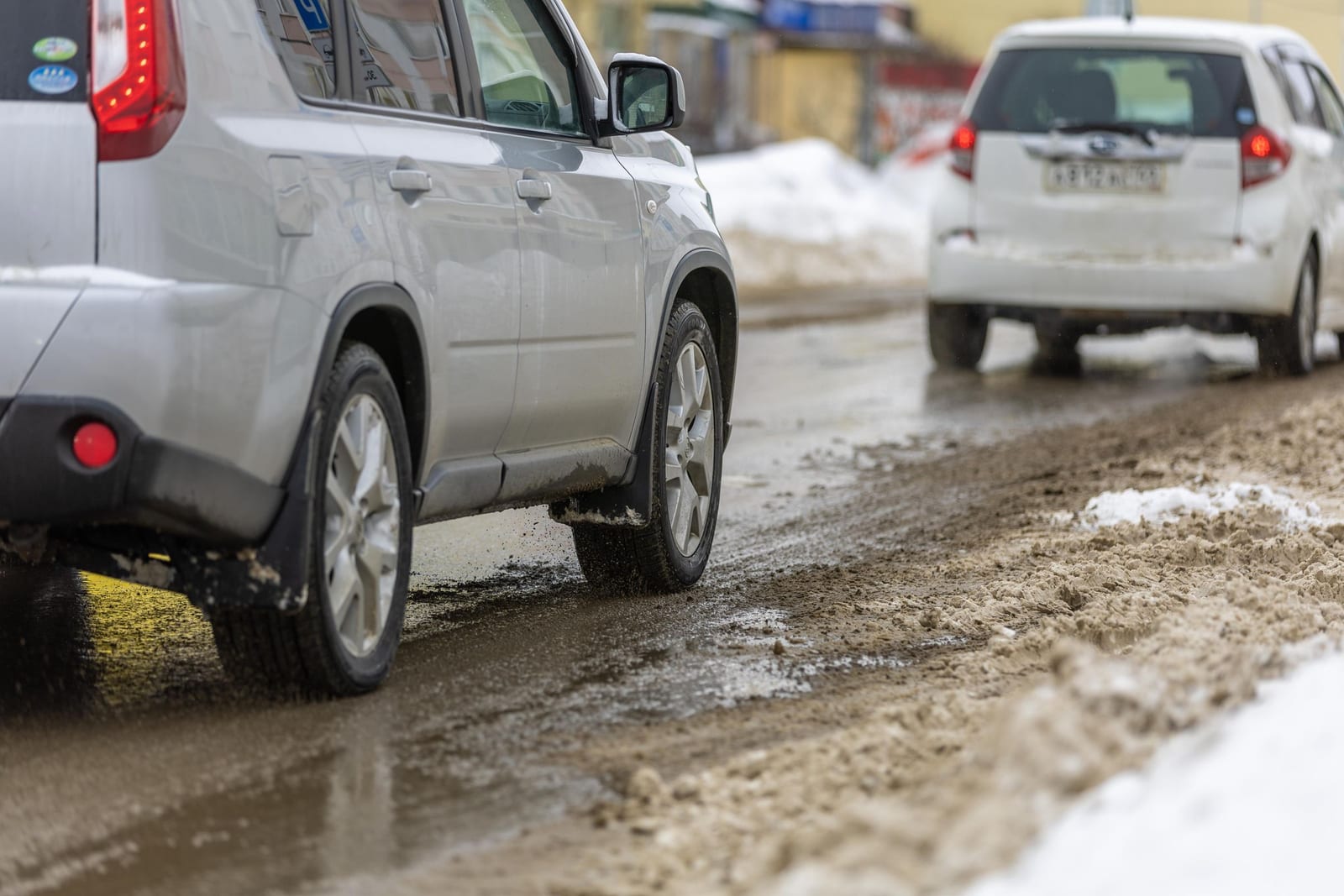
Cars driving through brown salt brine and slush on a treated winter road, grime thrown up over the lower doors and wheels

This is the actual test. Brine, slush, and sand thrown against the lower panels for five months — not a rainstorm, and not what a coat of wax was designed to survive.

Head to Head in Winter Conditions

Here's the comparison on the factors that actually matter between November and March.

Factor Wax Professional Ceramic Coating
Realistic winter lifespan Weeks. Roughly 6–12 in mild conditions, less under brine and sand. Years. Our packages are warrantied at 2, 6, or 10.
Resistance to road brine Limited. Salt chemistry and hot washes break it down quickly. High. A chemically resistant layer keeps brine sitting on the coating rather than soaking into paint.
Effort to wash salt off Moderate. Grime keys into a degraded wax film. Low. The slickness is the point — most winter grime rinses off with far less contact.
Reapplication mid-winter Needed at least once, and genuinely hard to do properly in the cold. None. Installed once, before the season.
Prep required A wash and light decontamination. Full decontamination plus paint correction — the coating locks in whatever is underneath.
Up-front cost Included in exterior detailing, from $199. 2-Year from $1,099, 6-Year from $1,399, 10-Year from $1,599 for a standard car.
Best suited to Short-term ownership, garage-kept cars, low winter mileage. Cars you're keeping, daily commuters, anyone tired of re-protecting the paint.

Note what the table doesn't claim. A coating isn't scratch-proof, doesn't stop rock chips, and doesn't make salt harmless. What it changes is how durable your protection is and how much effort winter maintenance takes. For chip and impact protection specifically, that's a job for paint protection film — a different product solving a different problem.

The Cost Math Nobody Runs

Wax looks dramatically cheaper because people compare a single application against a full coating install. That's not the real comparison. The real comparison is what it costs to stay protected across the winters you actually own the car.

Waxing properly means at least twice a year, and realistically a mid-winter reapplication too if you want continuous coverage through a NH season. Do that for five or six years and the running total starts closing on a coating — without ever matching its protection on the days that matter, because there's always a stretch where the wax has worn thin and the next application hasn't happened yet.

Coating math runs the other direction: one larger payment, then years of not thinking about it. Our 2-Year package starts at $1,099 for a standard car, the 6-Year at $1,399, and the 10-Year at $1,599, with SUV and truck pricing above that. Divide the 6-Year across six New Hampshire winters and the per-season number looks a lot less alarming than the sticker.

Two honest caveats. First, that math only works if you keep the car — a coating on a vehicle you're selling next spring is money spent for the next owner. Second, the cheapest coating quote is almost always the worst value, because the savings come out of the prep, and bad prep gets sealed under the coating for years. We laid out what actually drives coating pricing in our ceramic coating cost breakdown.

Reality Check

The most expensive option isn't a coating. It's five winters of intermittent wax coverage followed by paint correction — or a repaint — on a finish that spent too many Februarys unprotected.

When Wax Is Still the Right Call

We install coatings for a living and we still talk people out of them regularly. Wax is the better buy in three situations:

  1. You're selling within a year. A proper exterior detail with quality wax or sealant makes the car look sharp for photos and walk-arounds at a fraction of the cost. You won't recover a coating's price in the sale.
  2. The car is garage-kept and barely sees winter. A weekend car parked from December to April doesn't face the brine exposure that makes a coating pay off. Wax is plenty.
  3. You actually enjoy doing it. Some people find waxing a car genuinely satisfying. If you're happy doing it every six weeks, you already have a maintenance system that works — a coating just automates something you don't mind doing.

The flip side is equally clear. If you commute daily down I-93 or across the state line toward Lowell and Methuen, park outside, and plan to keep the car for several more winters, wax is a losing strategy no matter how diligent you are. That's the profile a coating was built for.

What Matters More Than Either Choice

Here's the thing detailers don't say often enough: your wash routine matters more than which product is on your paint. Salt sitting on a coated car all winter still causes problems. A coating makes the salt easier to remove; it doesn't remove it for you.

  • Wash every two weeks through salt season, and after any major storm cycle. That's non-negotiable regardless of what's protecting the paint.
  • Get the undercarriage. Brine collects where you can't see it — rockers, wheel wells, the frame. That's where road salt does its most expensive damage.
  • Don't let salt film dry and sit for weeks. Time on the surface is what turns a rinse-off problem into an etching problem.
  • Book protection before the salt starts, not after. October and early November, ahead of the first treatments — our fall calendar fills fastest for exactly this reason.

A coated car washed twice a month comes out of a New Hampshire winter in genuinely good shape. A coated car that never gets washed comes out with a coating full of bonded salt film. The product is a multiplier on your habits, not a substitute for them.

How We Handle Both at Our Derry Shop

Both paths start the same way, because both depend on what's underneath: a wash, then chemical and mechanical decontamination to pull out embedded iron and road fallout. For a wax finish, that's most of the job — it's part of our exterior and full service packages, starting at $199 and $299 respectively.

For a coating, decontamination is where the work begins rather than ends. Paint correction comes next, because a coating is only as good as the surface it bonds to, and any swirls or etching left behind get locked under it for years. Then the coating goes down in our climate-controlled bay — temperature and humidity control isn't a luxury for this step, it's what lets the product cure the way the manufacturer designed it. Installation is a one-day service, and as a System X Certified installer we register the warranty in your name.

If you want the full breakdown of which coating fits which vehicle, we covered the entire product line in our System X coatings guide. And if you're not yet sure whether your paint needs correction before anything gets applied, that's the conversation to have first — start with our detailing services.

Frequently Asked Questions

How long does car wax last through a New Hampshire winter?
Plan on weeks, not the full season. A quality carnauba or synthetic wax is generally good for about six to twelve weeks in mild conditions, and a New Hampshire winter is not mild conditions. Repeated brine exposure, sand abrasion, and hot-water washes strip it faster, which is why a November wax is usually gone well before the last salt truck runs in March.
Does ceramic coating stop road salt from damaging paint?
It doesn't make salt disappear, but it changes what salt can do. A coating is a hard, slick, chemically resistant layer bonded to your clear coat, so brine and grime sit on top of the coating instead of soaking into porous, unprotected paint — and they rinse off with far less effort. Salt left sitting on any surface all winter still causes problems, so a coating reduces the damage and the work; it doesn't replace winter washing.
Is ceramic coating worth it if I only keep my car a few years?
It depends on how many winters you have left with the car. Our 2-Year package fits a shorter ownership window, while the 6- and 10-Year packages make more sense when you plan to keep the vehicle. If you're selling within a year, a proper exterior detail with a quality sealant or wax is the more sensible spend.
Can you wax a car that already has a ceramic coating?
You can, but there's rarely a reason to. Wax sits on top of the coating, dulls some of the slickness the coating was installed for, and wears off in weeks anyway. If a coated car looks like it needs a boost, the right move is a proper decontamination wash and a coating-safe topper rather than a traditional paste wax.
When should I get a ceramic coating installed before winter?
Aim for October or early November, before the first salt runs. Coating is a one-day service in our shop, but it has to follow decontamination and paint correction, and our fall calendar fills fastest as drivers book pre-winter protection. Coatings also need controlled temperature and humidity to cure, which is why we install year-round in a climate-controlled bay rather than a driveway.
Is a ceramic spray from the auto parts store the same thing?
No. Consumer ceramic sprays are closer to wax than to a professional coating — they sit thin and wear off in weeks to a few months. They're a fine way to top up an existing coating or add slickness after a wash, but they aren't warranty-backed protection and won't carry a car through a full New Hampshire winter on their own.

The Bottom Line

Ceramic coating vs wax isn't really a question about which product is better. It's a question about how many more New Hampshire winters this car has to get through under your ownership. One winter, wax is fine. Five winters, wax is a chore you'll skip at least once — and the winter you skip is the one that costs you.

Whichever way you go, the decision that matters most is timing. Get the protection on before the first brine truck runs, and wash the car through the season. That combination beats an expensive product applied late, every single time.

"Wax is a season. A coating is a plan."

— The Avid Auto Standard

Not Sure Which One Your Car Needs?

Tell us what you drive, how long you're keeping it, and where it parks all winter. We'll tell you honestly whether a coating is worth it — or whether a detail and a good wax is the smarter spend.

Get Free Quote

About Avid Auto Detailing

Arthur and the Avid Auto Team protect vehicles from our climate-controlled shop at 15 Central St in Derry, NH, serving drivers across southern New Hampshire and the Merrimack Valley. We install System X Certified ceramic coatings in 2-, 6-, and 10-year packages, and we've watched more than a few winters' worth of road salt come through the bay.

Fully Insured and straight with you about what your car actually needs — including the times the answer is a $199 exterior detail instead of a coating.

"Detail Obsessed – Eco-Smart Products"