Seasonal Care

Salt Season Starts Sooner Than You Think: A Fall Checklist for Your Paint and Interior

Brine goes down before the snow does. Here's what to handle in September, October, and November — and what you can safely skip.

Most people in southern New Hampshire mark the start of winter car care by the first real storm. You wake up, there's four inches on the driveway, the plows have been through, and you think: I should probably get the car looked at.

By then it's late. Road crews don't wait for snow to fall before putting chemistry on the pavement — they put liquid brine down ahead of a forecast storm, because it's far easier to keep ice from bonding to asphalt than to break it loose afterward. So there are days in late October and early November when I-93, Route 28, and every main road between Derry and Manchester are already salted under a completely dry, sunny sky.

Your car starts collecting salt on those days. Not in January. And the work that actually protects it — decontaminating paint, sealing it, cleaning and drying carpet, getting the underside rinsed out — all takes time, warmth, and a shop calendar that hasn't filled up yet. All three of those are things fall has and winter doesn't.

This is the sequence we'd run if it were our own car, in the order that makes sense, with honest notes about what's worth paying for and what isn't.

The 30-Second Version

  • September — fix things. Anything that needs correcting, repairing, or deep cleaning happens now, while panels are warm enough to work on and the schedule is open. Protection applied over unfixed problems locks them in.
  • October — protect things. Decontaminate, then seal or coat the paint, the wheels, the glass, and the exterior trim. This is the month with the right temperatures and the shortest wait.
  • November — set up for maintenance. Rubber mats in, a wash kit and a de-icer in the trunk, weatherstripping treated, and a plan for how you'll keep salt moving off the car for the next five months.
  • The one thing that matters most isn't a product. It's washing the car regularly once salt is down, especially the underside, and especially after a thaw.
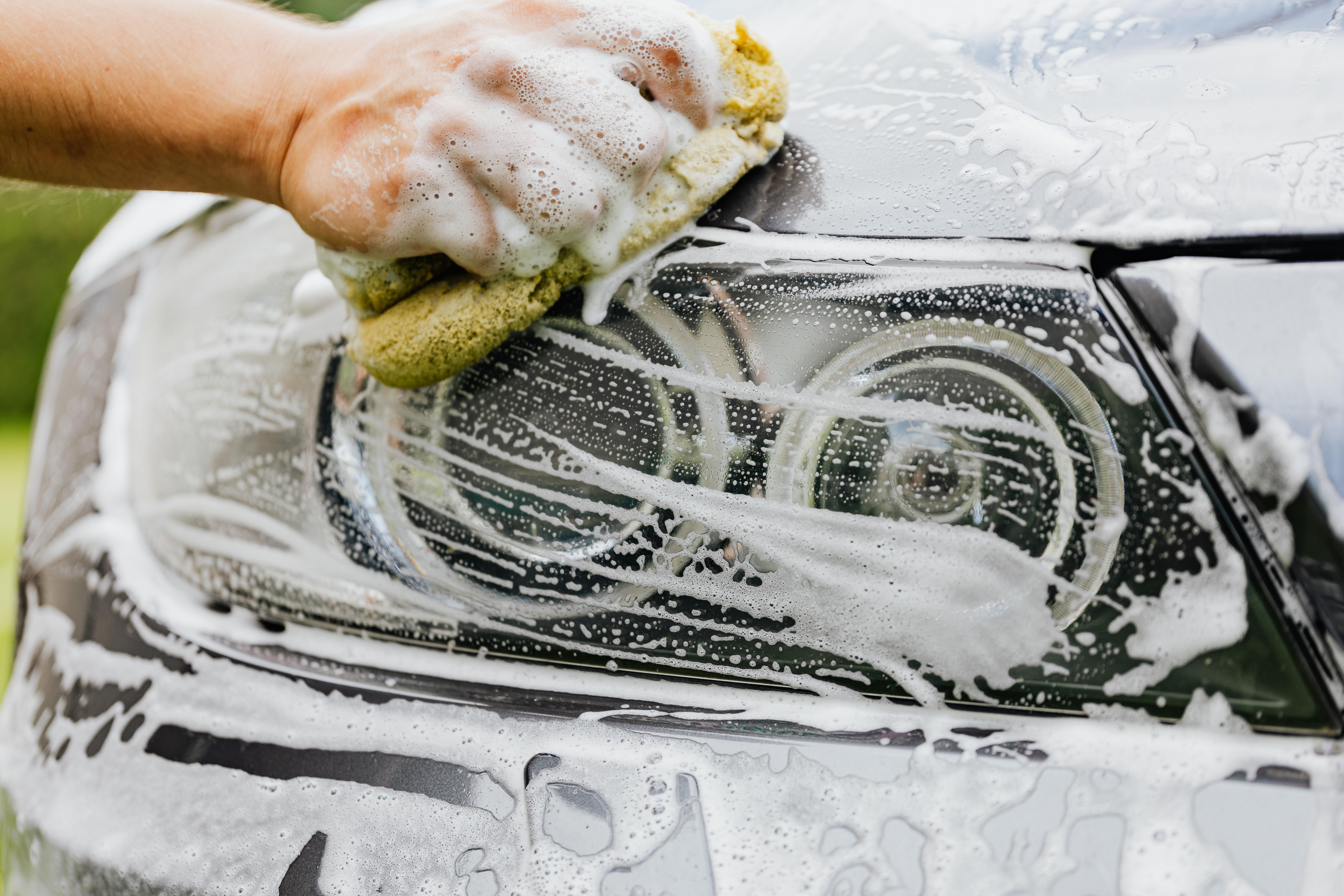
Bare hand pressing a foam-loaded yellow sponge across a car's headlight and front bumper, thick white lather streaming down the paint during a hand wash

Everything in this checklist is downstream of one step: getting the surface genuinely clean before anything protective goes on top of it.

Photo by Karola G — source, Pexels License

Why Fall Is the Real Deadline

Three things are true in October that stop being true in December, and every one of them affects the outcome.

Temperature

Sealants and ceramic coatings are chemistry. They need a surface within a workable temperature range to flash off and cure properly, and they need the car to stay dry and undisturbed afterward. A shop with a climate-controlled bay can do this in February, but the car has to live inside for it, which means the appointment is longer and scarcer.

Condition

Right now your paint is carrying a summer's worth of embedded contamination — brake dust, industrial fallout, sap residue, baked-on bug remains. Protection applied over that bonds to the contamination, not the clear coat, and it fails early. The removal work is easier and cheaper before salt gets layered on top of it.

Calendar

Fall bookings are the quietest stretch of the detailing year in this area. Come spring, everyone in Derry, Londonderry, and Salem calls in the same three weeks of April. Getting on the schedule now is simply a shorter wait than getting on it later, for the same work.

There's also a compounding effect people miss. Salt damage isn't a single event — it's five months of repeated wet-dry cycles, where a brine film draws moisture out of humid air, stays liquid on your paint and in your rocker panels well below freezing, and keeps working. We've covered the chemistry of that in detail in our piece on why NH road salt is a chemical threat rather than just a cosmetic one. The short version: a car that goes into winter clean and sealed ends winter in a different condition than one that doesn't, and the gap widens every year you own it.

September: Fix What's Broken

This is the month for anything that involves removing something. Once you seal or coat a panel, whatever is underneath is locked in until the protection comes off. So the order is never negotiable: fix, then protect.

Walk the paint in raking light

Pull the car out around sunset, or into a garage with a light held at a low angle, and look across the panels rather than straight at them. You're separating three things: contamination that will come off in a decontamination wash, swirls and haze that need machine polishing, and etching that's already cut into the clear coat. If you're not sure which one you're looking at, we wrote a driveway test for exactly that in our guide to telling dirty paint from etched paint.

Be realistic about what to act on. Light swirls you only see in direct sun are not a fall emergency — they're a spring project. Etching on a horizontal panel, or a section of clear coat that looks dull and chalky compared to the rest of the car, is worth handling now, because a compromised clear coat is exactly where salt gets a foothold.

Deal with chips and scratches that reach metal

Run a fingernail across any rock chip on the hood or leading edge of the roof. If it catches and you can see grey or a different color at the bottom, the chip has gone through the paint. Touch-up paint on a chip like that in September is a five-minute job with a fine brush. The same chip left open through a salted winter is where rust starts, and rust spreads under the paint around it. This is the highest-value ten minutes in the entire checklist and it costs almost nothing.

Deep clean the interior — before it matters

Winter interiors fail in a predictable way: salt, sand, and meltwater get tracked in, soak into carpet that's already holding summer's dirt, and then never fully dry because the car is cold and closed for five months. That's how you get the musty smell in February and the white crust that won't vacuum out.

Doing an extraction clean now means the carpet goes into winter actually dry and actually clean, so the only thing in it by March is the winter's salt, which comes out. The cost of that work depends mostly on what's already in there — we broke the variables down in what professional interior cleaning actually costs and why the number moves.

Order Matters Cleaning the interior after you've put winter mats down is backwards, and it's the most common sequencing mistake we see. New mats over dirty, damp carpet trap moisture against the fibers and the floor pan all winter. Clean first, dry completely, then cover.

October: Put the Armor On

October is the protection month. Everything here is about putting a slick, sacrificial layer between road chemistry and the surfaces you care about. The pattern is the same for every surface: clean it properly, then protect it.

Decontaminate before you protect — this is the step people skip

A wash removes loose dirt. It does not remove the iron particles, industrial fallout, and bonded road film that have worked into your clear coat since April. Run your palm over a dry panel inside a thin plastic bag: if it feels gritty rather than glass-smooth, there's contamination in there.

Removing it takes a chemical decontamination step and usually a clay treatment, and it's the difference between protection that lasts the winter and protection that's mostly gone by January. A sealant bonded to embedded fallout is bonded to something that's going to lift off. If you're considering a coating, that prep work is the majority of the job — we walked through the whole sequence in what happens before a ceramic coating goes on.

Choose a protection level honestly

There's no single right answer here, and the honest version depends on how long you're keeping the car and how much winter washing you'll realistically do.

  Wax Synthetic sealant Ceramic coating
Realistic winter lifespan Weeks. Often gone before the holidays under repeated salt washing. Typically carries through a full salt season. Years, with maintenance washing.
Prep required A good wash. Wash plus decontamination. Full decontamination and usually paint correction. Multi-day.
Best for A car you're selling soon, or a driver who enjoys reapplying it. Most people. Strong protection for one winter at a sane price. Cars you intend to keep for years, newer vehicles, and anyone tired of reapplying anything.
Fall timing note Can be done any warm-ish weekend. Book in October; straightforward turnaround. Needs the longest lead time and controlled conditions. Decide in September.

If you want the full cost-and-durability comparison between the top two options for a New Hampshire winter specifically, that's its own article: ceramic coating versus wax through a NH winter. What matters for this checklist is simply that you pick one and get it on before brine season, rather than spending October deciding.

Don't stop at the paint

Four surfaces get skipped constantly and all four are cheap to protect in the fall:

  • Wheels and wheel wells. Wheels take more brine than any painted panel on the car, and hot brake dust embeds in the finish. Decontaminate them, then seal or coat them — a sealed wheel rinses clean in winter instead of needing a scrub in the cold.
  • Glass. A hydrophobic glass coating is the single most underrated winter upgrade. Water and slush shed at speed, wiper blades work less, and ice scrapes off with noticeably less fighting. Takes twenty minutes.
  • Exterior plastic and rubber trim. Salt and repeated freeze cycles bleach unprotected black trim to grey permanently. A trim sealant applied in October is far easier than restoring faded trim in April.
  • Rubber door and trunk seals. Treat them with a dressing meant for weatherstripping. This is what stops a frozen seal from tearing when you yank a door open on a 10-degree morning — a genuinely expensive repair for a job that takes ten minutes.

November: Set Up the Winter Routine

By November the protection is on and the goal shifts. Nothing you apply in fall removes salt — it just makes salt easier to remove. The removing is on you, every few weeks, for five months.

The interior kit

  • Deep-channel rubber mats, front and rear, sized for your vehicle so they don't slide under the pedals. The whole point is a raised lip that holds slush and salt instead of letting it run into the carpet. Pull them out and hose them off whenever they've got a crust on them.
  • A cargo tray or rubber mat in the trunk, if you're throwing boots, hockey bags, or firewood back there.
  • Fabric protection on cloth seats and carpet, if it isn't already there. It doesn't make anything spill-proof; it buys you the minutes to blot something up before it wicks into the fiber.
  • A small brush and a shop vac session once a month. Salt crust in carpet is abrasive — it cuts fiber every time someone steps on it. Getting it out is mostly a matter of doing it before it's ground in.

The winter wash rules

This is the part of the checklist that actually determines how your car looks in April, and most of it is free.

  1. Wash every two weeks or so once salt is down, and more often after a stretch of wet, thawing days. Salt sitting dry is comparatively inert. Salt that's wet is working.
  2. Always rinse the undercarriage. Rocker panels, wheel wells, subframe pockets, and the seams behind the wheels are where brine pools and where rust actually starts. This matters more for the vehicle's lifespan than anything you do to the hood.
  3. Pick a day above freezing when you can, and dry the door jambs, handles, mirrors, and fuel door afterward so nothing freezes shut.
  4. Skip the harsh brush washes. Winter grit plus a stiff brush is how a car picks up a full set of swirl marks in a single season — the mechanism is the same one behind swirled and hazy paint. A touchless rinse with an undercarriage pass is a reasonable compromise on a cold week.
  5. Keep a bottle of quick detailer and two microfibers in the car. Handling something the day it lands is always cheaper than correcting it in spring.

Common Mistake Waiting for a warm winter day to do one big wash. Five months of accumulated brine on the underside is not undone by a single March rinse — the damage happened during the accumulation. Frequency beats thoroughness all winter.

What You Can Honestly Skip

Checklists get long because everything sounds important. A few things genuinely aren't, at least not this fall.

  • Full paint correction, if the car is a daily driver with light swirls. Correction removes a measured amount of clear coat, and doing it right before five months of abuse is poor sequencing. Correct in spring, when the result lasts through the good months. Deeper defects and etching are the exception — those affect protection, so handle them now.
  • Aftermarket undercoating sprays. Applied over existing rust or trapped moisture, they can seal the problem in rather than out. If you're considering it, it's a conversation with someone who can actually see the underside of your car first.
  • Waxing on top of a fresh sealant or coating. It doesn't stack. At best it's redundant; at worst it's a soft layer sitting on a hard one and it disappears in two washes.
  • Replacing trim that's only lightly faded. A restoration and then a sealant in spring is usually cheaper and looks the same.

What it costs to have it done

For people who'd rather hand the fall work off: our interior and exterior packages start at $199, and a full service detail — inside and out, decontamination included — starts at $299. Coating work is quoted after we've seen the paint, because the honest number depends entirely on what condition it's in, which is exactly why we won't give you one over the phone. If you want the general framework for what moves a detailing price up or down, we laid it out in what car detailing actually costs and what changes the number.

The Fall Checklist, On One Page

Print this, or just work down it

  • Inspect paint in raking light. Separate contamination from swirls from etching.
  • Touch up every chip that has gone through to metal. Ten minutes, highest return in the list.
  • Extraction-clean the interior and let it dry completely. Before mats go in, not after.
  • Decontaminate the paint. Chemical plus clay. No protection goes on before this.
  • Apply your chosen protection — sealant for most people, coating if you're keeping the car.
  • Seal the wheels and wheel wells. They take more brine than anything else.
  • Coat the glass. Twenty minutes, pays off on every wiper cycle.
  • Protect exterior trim and treat rubber seals. Prevents fading and frozen-door damage.
  • Deep-channel rubber mats in, cargo tray in the back.
  • Winter kit in the trunk: quick detailer, microfibers, a proper snow brush with soft bristles, de-icer.
  • Set a recurring reminder to wash every two weeks once salt is down — undercarriage every time.

None of this is exotic. It's the same work a shop does, in the same order, and the reason the order matters is that every step on the list makes the one after it work better.

Frequently Asked Questions

When does road salt season actually start in New Hampshire?
Earlier than the first snowfall. Crews pre-treat highways and main roads with liquid brine ahead of a forecast storm, because preventing ice from bonding to the pavement works better than breaking it loose afterward. That means your car can pick up salt from a dry road in late October or early November on a day when nothing has fallen. If you wait for the first plowable storm to think about protection, you've usually already logged several weeks of exposure.
What's the single most important fall step to protect paint from salt?
A proper decontamination wash before you apply any protection. Salt clings to a rough, contaminated surface far more stubbornly than to a clean, slick one, and any wax, sealant, or coating you put over embedded fallout and brake dust is bonding to the contamination instead of the paint. Wash, chemically decontaminate, clay the surface, then protect. Skipping decontamination is the most common reason fall protection doesn't last through February.
How far ahead should I book a fall detail or ceramic coating in the Derry area?
Plan on lead time measured in weeks rather than days for an October appointment, and longer for anything involving paint correction plus a coating, because that's a multi-day job in a climate-controlled bay. The constraint isn't just the calendar, it's temperature and cure time. Coatings need controlled conditions to flash and cure properly, so the usable window narrows as the weather turns. Calling in September or early October is a meaningfully shorter wait than calling the week of the first storm.
Is an undercarriage wash worth it, or is that an upsell?
It's worth it in a salt state, and for the long-term life of the vehicle it matters more than most cosmetic paint work. Brine collects in rocker panels, subframe pockets, around brake and fuel lines, and in the seams behind the wheel wells, and those are the areas that quietly turn into structural rust. Rinse the underside regularly through the winter, and prioritize the days after a thaw, when salt on the road is wet and chemically active rather than sitting as dry crystals.
Do I really need to do anything to the interior before winter?
Yes, and most of it is cheap. Salt tracked in on boots soaks into carpet fiber and dries into a white crust that abrades the fibers and holds moisture against the floor pan. Deep clean and fully dry the carpet before winter starts, then lay a set of deep-channel rubber mats over it so the salt lands in a tray you can dump out. Doing it in the other order — new mats over dirty carpet — just seals the problem in for five months.
If I only have the budget for one professional service this fall, what should it be?
A full exterior detail with decontamination and a durable sealant, wheels and wheel wells included. That one service strips a summer of embedded contamination, puts a slick sacrificial layer between brine and your clear coat, and makes every winter wash you do yourself dramatically more effective. A ceramic coating is the better long-run value if you keep the car for years, but it's a bigger job — and a decontaminated, sealed car in October is in far better shape than a neglected one.
Can I still wash my car when it's below freezing?
You can, and you should, but pick your day and your method. Wash above freezing when you can, dry the door jambs, handles, and seals so nothing freezes shut, and treat the rubber weatherstripping with a suitable dressing so a frozen seal doesn't tear when you pull the door open. If a self-serve bay on a cold day is the only option, spend your time on the lower panels and the undercarriage, then get the car dry and moving instead of letting it sit wet.

The Bottom Line

Salt season doesn't announce itself. It starts on an ordinary dry afternoon in late fall when a brine truck runs Route 102 ahead of a storm that hasn't arrived yet, and by the time you notice the white haze on your rocker panels you've been driving through it for weeks.

Everything on this list is easier, cheaper, and more effective done in September and October than in January. That's not a sales pitch — most of the list is free, and the two highest-value items are touching up rock chips and washing the underside regularly. The paid work simply gets you a cleaner starting point and a layer that makes the free work go further.

If you'd rather have someone else run the checklist, that's what we do. We're a small team working out of a climate-controlled shop at 15 Central St in Derry, and a fall walk-around takes a few minutes. Sometimes the honest answer is that your paint is in good shape and a decontamination and seal is all it needs — we'd rather tell you that than sell you the biggest package on the menu.

"You can't stop salt from landing on the car. You can decide what it lands on."

— The Avid Auto Standard

Beat the First Brine Truck

Fall appointments fill from the top down. Tell us what you're driving and how long you plan to keep it, and we'll tell you honestly what's worth doing before winter — and what isn't.

Request a Quote

About Avid Auto Detailing

Arthur and the Avid Auto Team correct and protect paint from a climate-controlled shop at 15 Central St in Derry, NH, serving drivers across Derry, Londonderry, Manchester, Salem, and the Merrimack Valley. Interior and exterior packages start at $199, full service details at $299, with paint correction and System X Certified ceramic coating available once we've seen what your paint actually needs.

Fully Insured — a small team that would rather tell you which half of the checklist you can skip than sell you all of it.

"Detail Obsessed – Eco-Smart Products"